A companion piece to "The Prediction: AI Music, Sony, Universal, and the Deal That's Coming" — by Jason Wydro (01DW3ST)
On August 12, 2026, Suno and BMG announced a global agreement1. If you read my last piece, you already know why this matters: I predicted the music fight would end not in courtrooms but in contracts, and that the contracts would keep multiplying until everyone whose music taught the machines had a seat at the table. This deal is the next domino — and parts of it look remarkably like the framework I argued for. Parts of it. Let's walk through what actually happened, what the words mean, and what's still missing.
What was announced
The deal, co-announced by both companies, is described as a global alliance establishing a strategic framework covering BMG's recorded music (the actual sound recordings, often called "masters") and its music publishing repertoire (the underlying songs — lyrics and compositions — as distinct from any one recording of them). BMG represents more than 3 million songs and recordings, with catalogs and works connected to artists and songwriters including will.i.am, Jean-Michel Jarre, Tina Turner, Jason Aldean, Jelly Roll, and Paul Simon.
Three features stand out:
- It's opt-in. BMG artists and songwriters must choose to participate before their music can be used as training material (the recordings a model learns from, called "inputs"). Nobody on BMG's roster is swept in automatically.
- It settles the past. The agreement resolves ("settles prior use of") BMG recordings and publishing works that were already used4 — meaning compensation for what happened before the deal existed, not just what happens after.
- It's tied to a new model. The agreement arrives ahead of Suno's launch of a new AI music model2 described as developed in partnership with the music industry — a model built with licenses rather than defended after the fact.
Financial terms were not disclosed. BMG's executive vice president of global marketing and streaming, Celine Joshua, summed up the company's framing in five words: <cite index="6-1">"Choice is the guiding principle."</cite> Suno CEO Mikey Shulman framed the deal as part of building a more participatory future for music by working directly with the people who make it and the companies that represent them.
BMG is the first significant rights holder to sign with Suno3 since Warner Music Group's settlement-and-license agreement in November 2025 — and unlike Warner, BMG got here without ever filing a lawsuit.
The timing is not a coincidence
To understand why this deal landed now, put three dates side by side:
- July 31, 2026: The Munich Regional Court (Landgericht München I, case 42 O 763/25)10 rules that Suno infringed the copyrights of works administered by GEMA6 — Germany's collecting society (a "collecting society" is an organization that licenses music and collects royalties on behalf of its members; GEMA represents roughly 100,000 songwriters and publishers). The court found Suno for damages, ordered it to disclose revenue7 information so those damages can be calculated, and issued injunctive relief (a court order to stop the infringing activity). Critically, the court held that training conducted entirely in the United States can still create German8 liability when the outputs reach German users. Suno has said it is evaluating its options, including an 5.
- August 6, 2026: Suno publishes a set of "principles" in a blog post from Shulman — committing to limits on downloads of AI songs (a promise carried over from the Warner deal), asserting that it does not use artists' names in training , and announcing new watermarking and fingerprinting techniques (inaudible digital markers embedded in audio, and acoustic "fingerprints" that let systems recognize a track — the same family of technology behind YouTube's ID). Suno also struck a deal with Musixmatch for lyrics detection9.
- August 12, 2026: The BMG deal is announced.
One reported detail is worth honesty here: a source told Billboard the principles announcement was already in the works before the German ruling. Fair enough — these deals take months to negotiate. But the sequence still tells the story. A court judgment finding actual , with a damages number still open and Suno's books ordered opened, changes every negotiation Suno is in. As legal analysts have pointed out, GEMA now holds something Warner never had: a ruling, not just leverage. Every rights holder still negotiating — including Universal and Sony — is watching what that ruling is worth before they sign anything.
And Suno, for its part, is building what one analysis called the accounting for deals it doesn't have yet: watermarking and fingerprinting exist on the output side precisely because without traceability there is no reporting, and without reporting there are no royalties. You don't build a meter unless you're planning to charge by the meter.
Scoring it against the framework
In my last article I laid out four things a fair resolution needs: retroactive compensation, a going-forward royalty, content identification with disclosure, and opt-in dignity. Here's how the BMG deal scores:
- Retroactive compensation: yes. The deal explicitly settles prior use. The past didn't get waved away — it got paid for.
- Opt-in dignity: yes. Participation is a choice made by the artists and songwriters, not just the company above them. This is the first major deal to put opt-in at the center, and it deserves credit for it.
- Content identification and disclosure: in progress. Watermarking, fingerprinting, and lyrics detection are announced but not yet proven at scale. Audio watermarks have to survive recompression, pitch shifts, and format changes, and every published scheme so far can be attacked with effort. The intent is right; the engineering has to hold.
- A going-forward royalty for everyone: unknown, and this is the gap. The economics weren't disclosed, and more importantly, this deal — like Warner's, like the Udio deals — covers one company's catalog. The independent artist with a self-released album in the training data is still standing outside the building. The American Federation of Musicians has already sued Warner and Universal over their AI licensing deals, arguing that the musicians on those recordings deserve their share — proof that even inside the deals, the question of who actually gets paid is not settled.
The scoreboard, and what's left
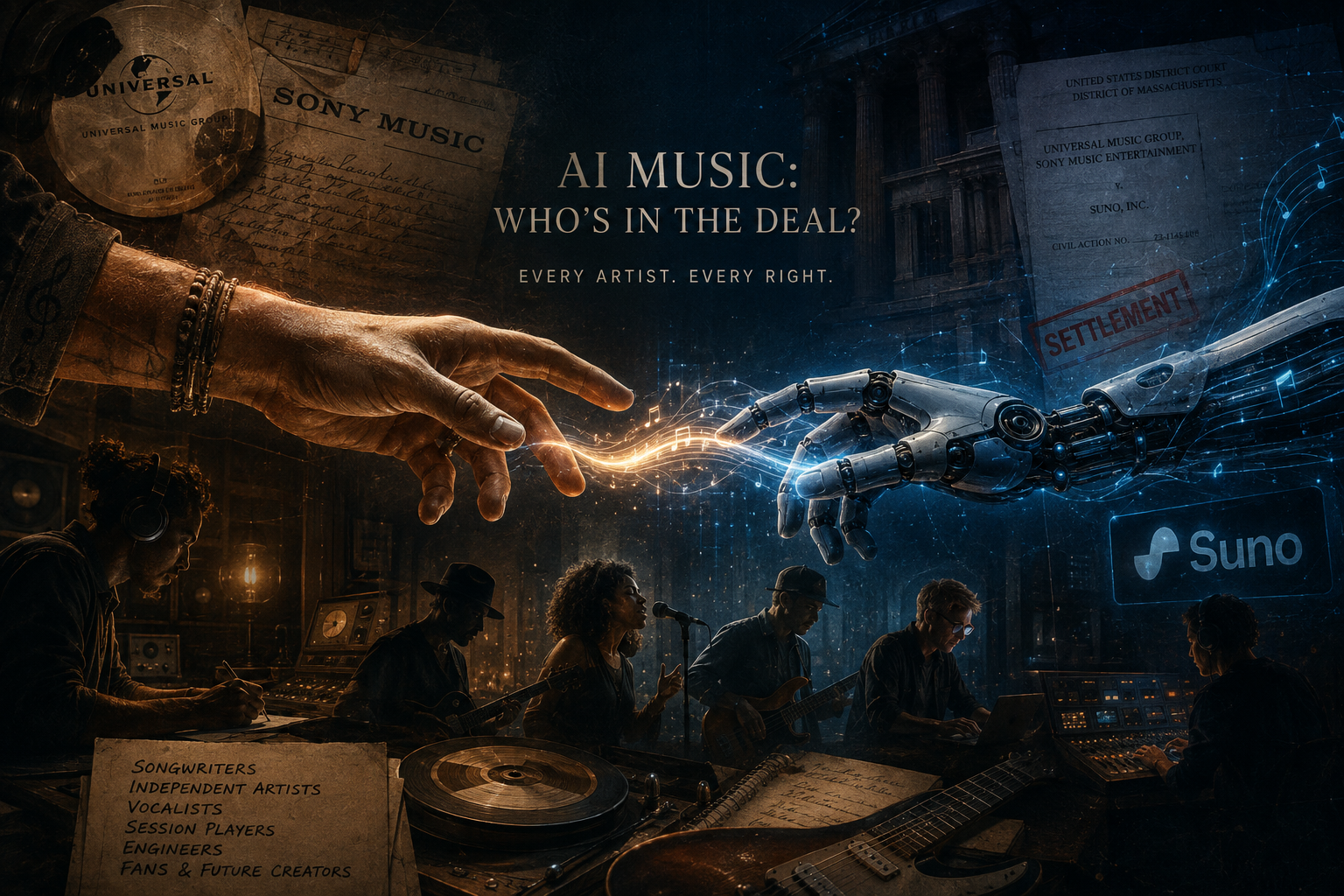
Here's where the field stands: Warner — settled and licensed. Udio — settled and licensed with Universal and Sony. BMG — licensed without ever suing. GEMA — won in court, damages pending, appeal likely, and a licensing deal the obvious endgame. Universal and Sony versus Suno in Massachusetts — the last major case standing, with the big motions due in 2027.
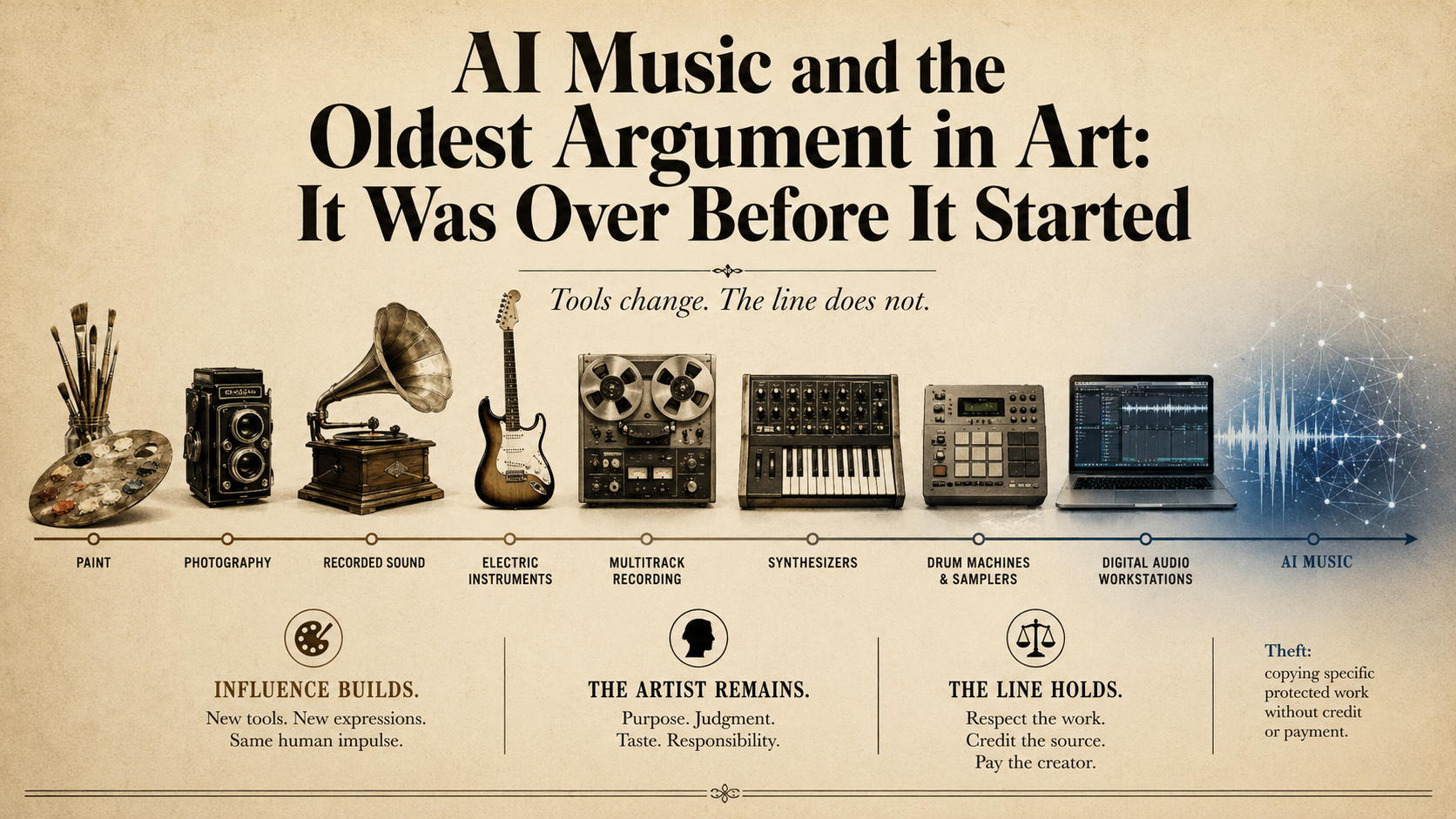
Every arrow points the same direction, and it's the direction I called: AI music is not being litigated out of existence. It is being metered, licensed, watermarked, and priced. That shouldn't surprise anyone who's followed my argument from the beginning — in "AI Music and the Oldest Argument in Art" I made the case that this technology is a continuation of how artists have always worked, and continuations get absorbed, not banned. The Suno–BMG deal is the clearest evidence yet — a major rights holder concluding that the future is a contract, an opt-in switch, and a settled past.
What I said last time still stands, and this deal makes it more urgent, not less: the template now exists, publicly, piece by piece. Opt-in exists. Settling prior use exists. Traceability is being built. The only remaining question is whether that template reaches past the companies with legal departments — down to every artist and rights holder whose music taught the machine. BMG's three million works just got their answer. The rest of us are still owed ours.